
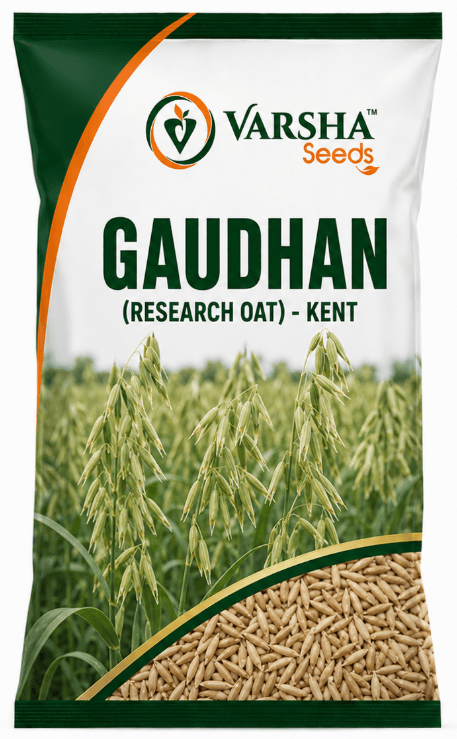
Gaudhan (Research Oat) - Kent
Research oat fodder line for winter season green fodder production with good quality biomass and suitability for dairy feeding programs.
Key Features
- Suitable for single and multi-cut fodder plans
- Balanced nitrogen and timely irrigation improve fodder yield
- Sowing in optimum winter window supports better tillering
- Can be integrated with legume fodders for nutritional balance
Growing Information
Growing Conditions
Best in cool season conditions on fertile, well-drained loam to clay loam soils.
Yield Estimates
Green fodder yield generally ranges around 40-60 t/ha depending on variety and crop management.
Packaging & Usage
Typical seed rate for fodder oat often ranges around 80-100 kg/ha depending on sowing method and purpose.
Key Points
Key Points
- Suitable for single and multi-cut fodder plans
- Balanced nitrogen and timely irrigation improve fodder yield
- Sowing in optimum winter window supports better tillering
- Can be integrated with legume fodders for nutritional balance
Agronomy & Management
Soil
Fertile, well-drained soils with good moisture holding capacity are ideal.
Water & Irrigation
Irrigate after sowing and subsequently based on soil moisture, especially in dry winter spells.
Sowing
Preparation
Prepare fine, firm seedbed and apply basal manure/fertilizer.
Sowing Depth
3-5 cm.
Spacing
Row spacing around 20-25 cm for line sowing.
Sowing Methods
- •Line sowing with seed drill
Sowing Time
Seed Rate
80-100 kg/ha
Harvesting
Harvest at proper growth stage for target use (green feeding or hay).
Post-Cutting Activities
Where multicut is practiced, support regrowth with moisture and nutrients.
Fertilizer
Balanced NPK with split nitrogen improves biomass quality and quantity.
Weed Control
Early weed suppression is needed for better stand establishment.
Pest & Disease Management
Monitor for foliar diseases and aphids; use need-based integrated control.