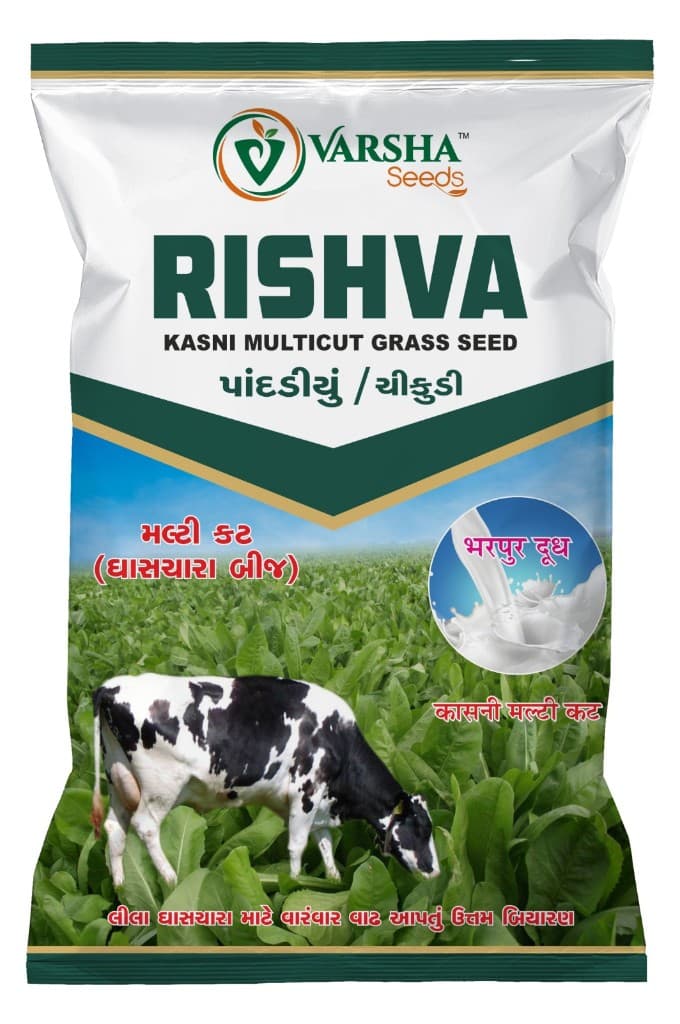

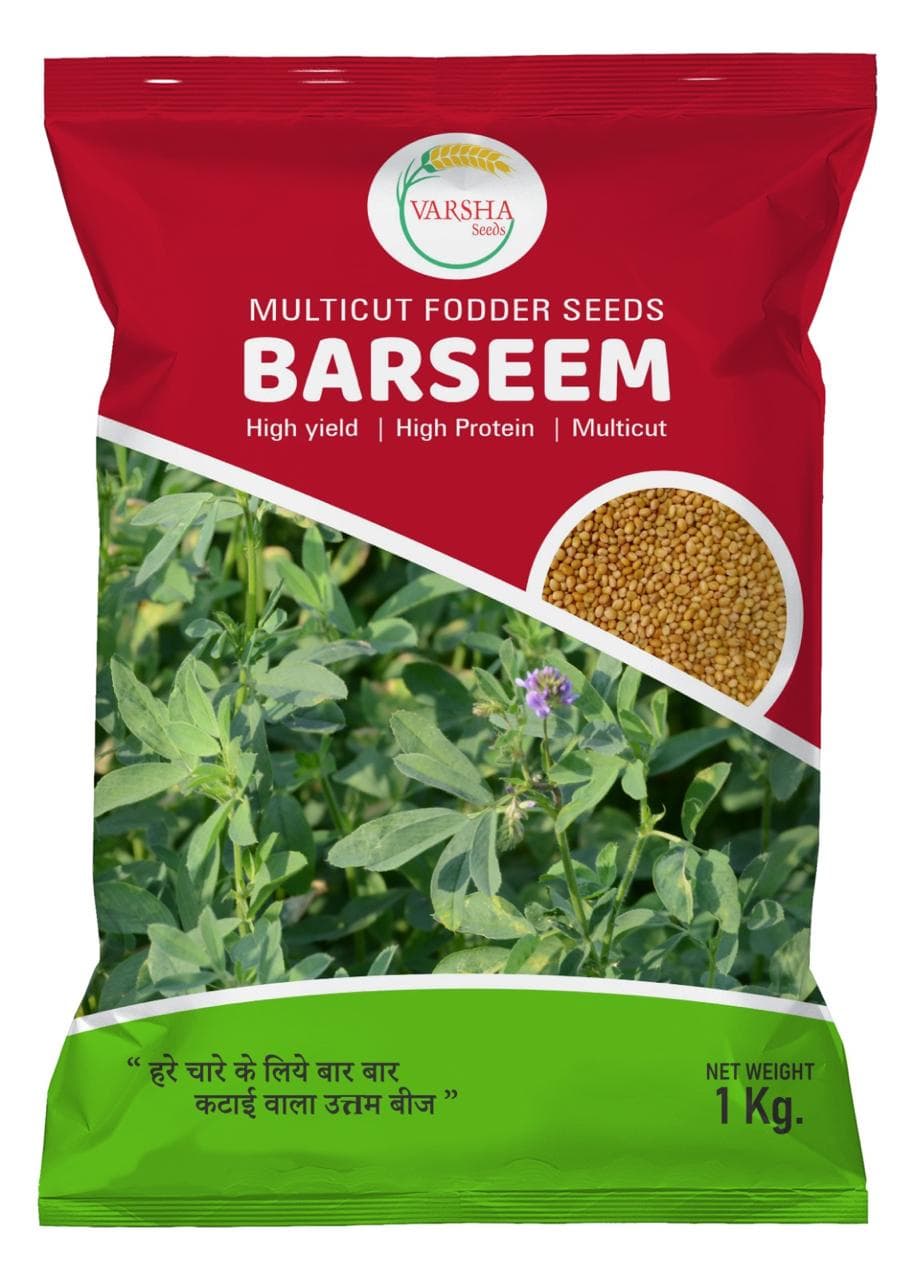
Barseem (Multicut Fodder Seeds)
Barseem, also known as Berseem clover (Trifolium alexandrinum), is a high-yield, high-protein fodder crop ideal for livestock, especially dairy animals. Contains 17% crude protein, 25.9% crude fiber, and 60-65% total digestible nutrients (TDN), making it one of the most nutritious fodder crops for cattle and buffaloes.
Key Features
- Rich in protein (17%) and total digestible nutrients (60-65% TDN)
- Excellent for dairy animals, increasing milk yield by 15-20%
- Multi-cut variety allows 4-5 harvests from a single sowing
- Fixes atmospheric nitrogen, improves soil fertility
- Low in lignin content, making it highly digestible
- Combines well with other winter fodders for balanced feed
- No adverse effects on animal health when fed properly
- Can be processed into hay or silage for off-season use
- Suitable for crop rotation with cereals and vegetables
- Extends green fodder availability during winter season
Growing Information
Growing Conditions
Thrives in mild temperatures (15-25°C) and requires well-drained, fertile loamy or clayey soils with pH 6.5-7.5. Needs irrigation every 15-20 days.
Yield Estimates
Under good management, yields 50-75 tons of green fodder per hectare over 4-5 cuts in a season (120-150 days).
Packaging & Usage
Net weight: 1 kg, suitable for small-scale sowing. Seed rate: 30-40 kg/ha for drilling.
Key Points
Key Points
- Rich in protein (17%) and total digestible nutrients (60-65% TDN)
- Excellent for dairy animals, increasing milk yield by 15-20%
- Multi-cut variety allows 4-5 harvests from a single sowing
- Fixes atmospheric nitrogen, improves soil fertility
- Low in lignin content, making it highly digestible
- Combines well with other winter fodders for balanced feed
- No adverse effects on animal health when fed properly
- Can be processed into hay or silage for off-season use
- Suitable for crop rotation with cereals and vegetables
- Extends green fodder availability during winter season
Agronomy & Management
Soil
Prefers medium to heavy textured soils with good water holding capacity. Clay loam or silty loam soils are ideal. Ensure good drainage as it cannot tolerate waterlogging. Soil pH should be between 6.5-7.5 for optimal growth. Avoid highly acidic or alkaline soils.
Water & Irrigation
First irrigation should be light after sowing. Subsequent irrigations at 15-20 day intervals depending on soil and weather conditions. Critical irrigation periods are after each cutting to promote quick regrowth. Total water requirement is approximately 500-600 mm for the complete growing season.
Sowing
Preparation
Prepare a fine seedbed free from clods and weeds. Two plowings followed by harrowing is recommended. Apply well-decomposed farmyard manure (10-15 tons/ha) during land preparation for better results.
Sowing Depth
Shallow sowing at 1-2 cm depth is ideal. Seeds should be covered lightly with soil after sowing.
Spacing
Row to row spacing of 25-30 cm is optimal for good growth and ease of harvesting.
Sowing Methods
- •Broadcasting: Uniform distribution of seeds over well-prepared field followed by light raking
- •Line sowing: Using seed drill for more uniform plant population and better resource utilization
- •Mixed sowing: Often sown with companion crops like ryegrass or oats for better yield and nutrition
Sowing Time
Seed Rate
20-25 kg/ha for pure stands; 15-20 kg/ha when mixed with other fodder crops
Harvesting
First cutting should be done 50-60 days after sowing when the crop is about 50-60 cm tall. Subsequent cuttings can be taken every 30-35 days. Cut at 5-7 cm above ground level for better regrowth. Harvesting during morning hours gives better quality fodder with maximum nutritive value.
Post-Cutting Activities
Irrigate the field immediately after each cutting. Apply 20-25 kg N/ha (45-50 kg urea) after each cutting except the last one. Keep the field free from weeds for better regrowth.
Fertilizer
Basal application: 20-25 kg N (45-55 kg urea), 60-80 kg P₂O₅ (300-400 kg SSP), and 40 kg K₂O (65-70 kg MOP) per hectare at sowing time. Top dressing: 20-25 kg N/ha after each cutting except the last one. Micronutrients like zinc and boron can be applied as per soil test recommendations.
Weed Control
Hand weeding 25-30 days after sowing is effective. Pre-emergence application of Pendimethalin @ 1.0 kg a.i./ha can be used for weed control. After first cut, weeds are usually not a problem due to rapid canopy development.
Pest & Disease Management
Generally not susceptible to serious pests or diseases. Occasionally aphids may attack, which can be controlled by spraying Imidacloprid @ 0.3 ml/L of water. Root rot and stem rot in humid conditions can be managed by avoiding waterlogging and spraying Carbendazim @ 1 g/L of water if necessary.