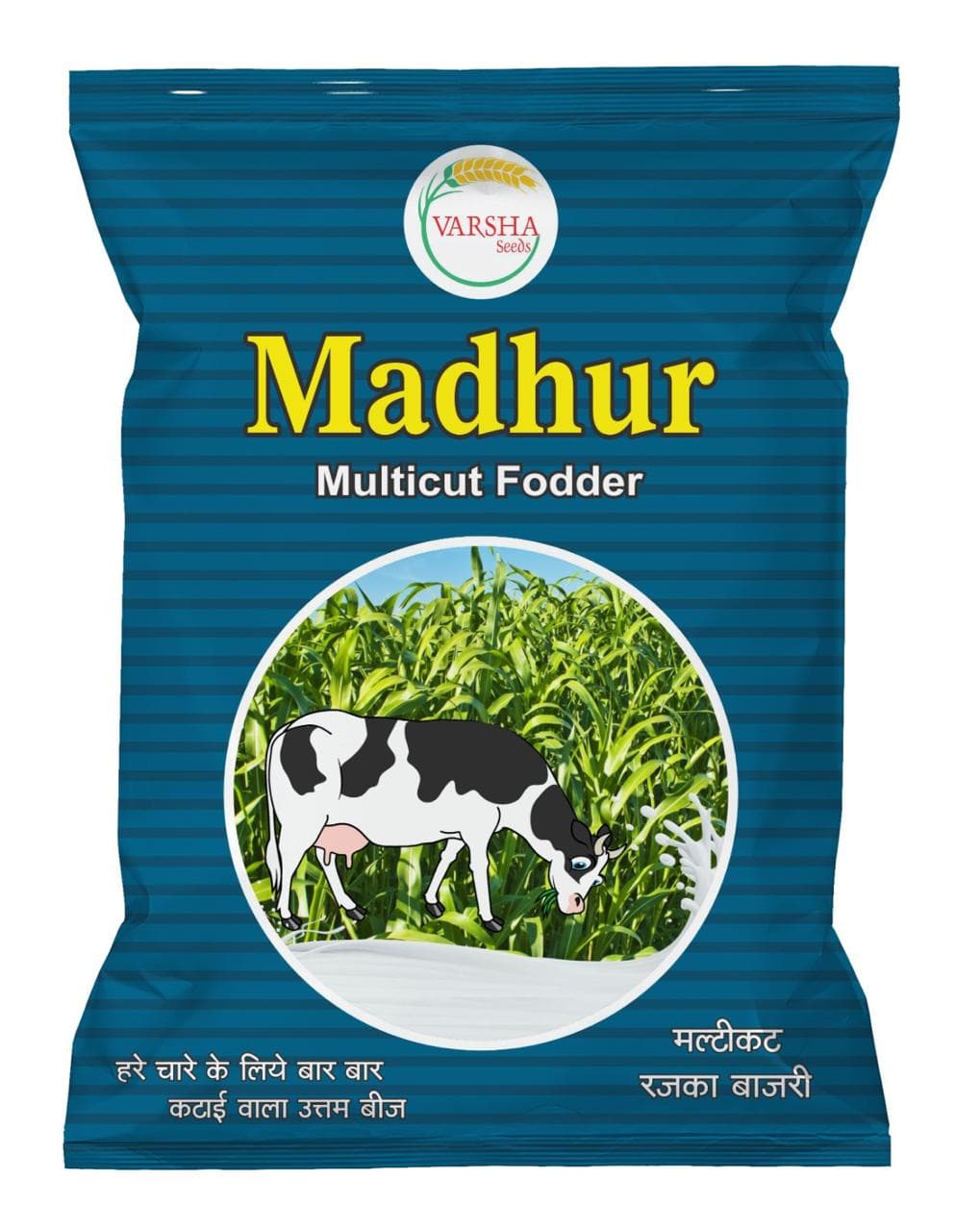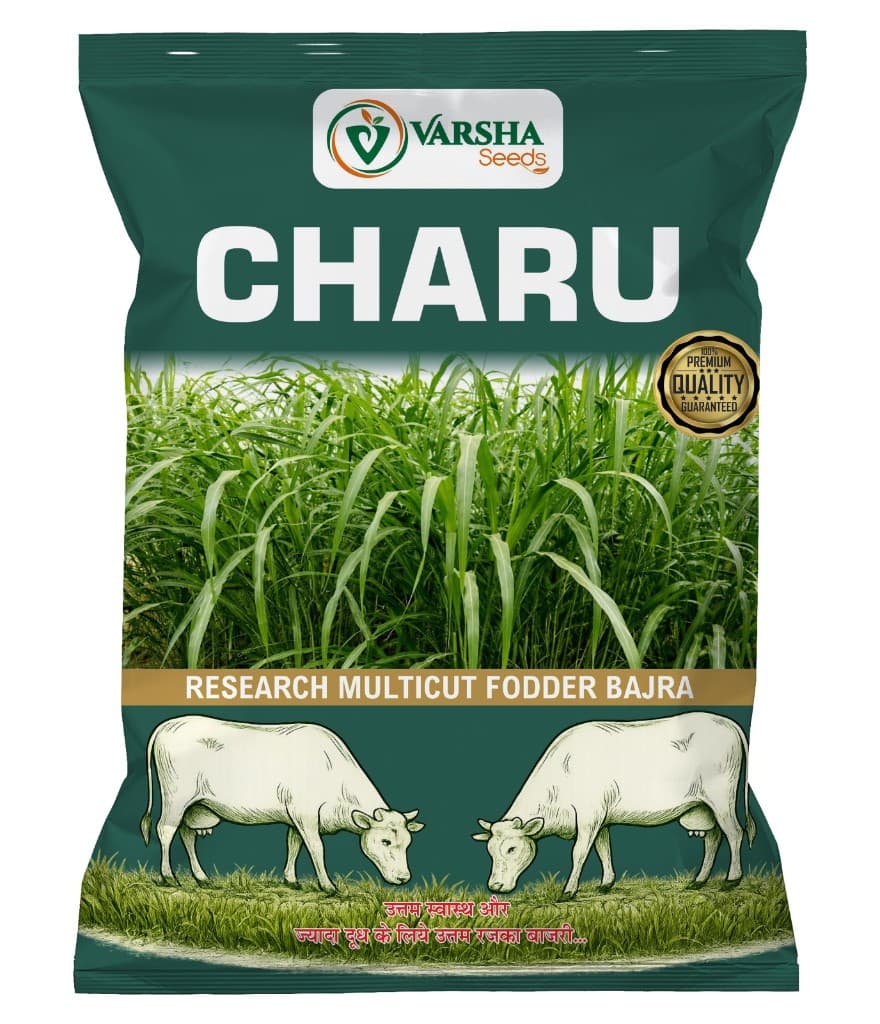

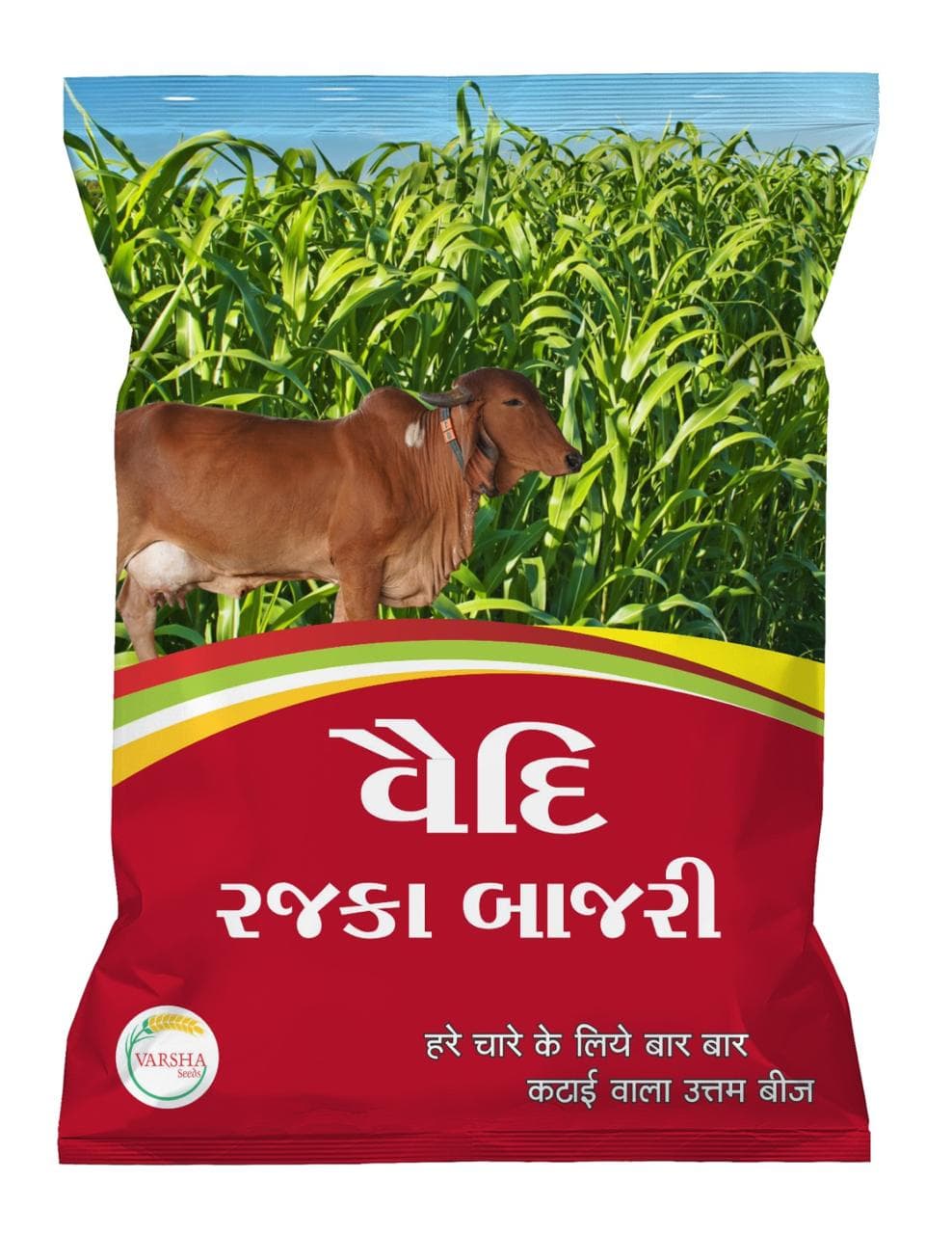
Vaidi Rajka Bajri (Fodder Seeds)
Vaidi Rajka Bajri is a superior fodder variety of pearl millet (Bajra), specifically engineered for multiple harvests. With its exceptional growth rate and nutritional profile (10-12% protein content), it produces abundant green fodder that significantly enhances milk production in dairy animals while withstanding drought conditions.
Key Features
- Specially developed multicut hybrid for higher biomass production
- Provides 3-4 cuttings from a single sowing
- High crude protein content (10-12%) for better animal nutrition
- Exceptional drought tolerance, stays green in water stress conditions
- Rapid regrowth capability after cutting
- Resistant to most common pests and diseases
- Lower prussic acid content compared to traditional varieties
- Suitable for silage making with excellent preservability
- Year-round cultivation possible in tropical and subtropical regions
- Particularly useful during fodder scarcity periods
- Seed rate: 6-8 kg/ha for optimal plant population
Growing Information
Growing Conditions
Grows best in warm, dry climates (20-30°C) and can be cultivated in various soils, though sandy loam with good drainage is ideal (pH 6.0-7.0). Sow post-monsoon (August-September) or in summer (February-May) for irrigated crops.
Yield Estimates
Can yield 30-50 tons of green fodder per hectare over multiple cuts, with the first harvest possible in 50-55 days.
Packaging & Usage
Seed rate: 6-8 kg/ha with spacing of 45 cm between rows and 10-15 cm between plants.
Key Points
Key Points
- Specially developed multicut hybrid for higher biomass production
- Provides 3-4 cuttings from a single sowing
- High crude protein content (10-12%) for better animal nutrition
- Exceptional drought tolerance, stays green in water stress conditions
- Rapid regrowth capability after cutting
- Resistant to most common pests and diseases
- Lower prussic acid content compared to traditional varieties
- Suitable for silage making with excellent preservability
- Year-round cultivation possible in tropical and subtropical regions
- Particularly useful during fodder scarcity periods
- Seed rate: 6-8 kg/ha for optimal plant population
Agronomy & Management
Soil
Adaptable to a wide range of soil types from sandy to loamy. Performs best in well-drained, fertile sandy loam with pH 6.0-7.0. Can tolerate moderate salinity but not waterlogging. Minimum soil depth of 30 cm is recommended for good root development.
Water & Irrigation
Moderately drought-tolerant after establishment but requires adequate moisture for optimal growth. First irrigation immediately after sowing if soil moisture is insufficient. Subsequent irrigations at 10-15 day intervals during summer and 15-20 days during rainy season. Critical irrigation periods are at tillering stage and after each cutting.
Sowing
Preparation
Field should be thoroughly plowed and harrowed to create a fine tilth. Remove weeds and previous crop residues. For best results, incorporate 8-10 tons of well-decomposed farmyard manure per hectare during land preparation.
Sowing Depth
Sow seeds at 2-3 cm depth for optimal germination and establishment.
Spacing
Row to row spacing of 45 cm and plant to plant spacing of 10-15 cm is recommended for efficient resource utilization and better yield.
Sowing Methods
- •Line sowing: Recommended method using seed drill for uniform crop establishment
- •Broadcasting: Can be used in small areas but results in uneven plant distribution
- •Ridge and furrow method: Preferred in areas with heavy rainfall or irrigation availability
Sowing Time
Seed Rate
6-8 kg/ha when sown in rows; 8-10 kg/ha for broadcasting method
Harvesting
First cutting at 50-55 days after sowing when the crop reaches about 1 meter height or at pre-flowering stage. Subsequent cuttings at 30-40 day intervals depending on growth rate. Cut at 8-10 cm above ground level to ensure proper regrowth. Always harvest in the morning hours for better nutritive quality.
Post-Cutting Activities
Irrigate immediately after each cutting. Top dress with 30-40 kg N/ha (65-85 kg urea) after each cutting for vigorous regrowth. Keep the field free from weeds, especially after first cutting when regrowth is vulnerable to weed competition.
Fertilizer
Basal application: 40 kg N (85 kg urea), 30 kg P₂O₅ (150 kg SSP), and 20 kg K₂O (35 kg MOP) per hectare at the time of sowing. Top dressing: 30-40 kg N/ha after each harvest to promote quick regrowth. Micronutrients like zinc sulfate @ 25 kg/ha should be applied if deficiency symptoms appear.
Weed Control
Critical weed-free period is first 30-35 days. Pre-emergence application of Atrazine @ 0.5 kg a.i./ha controls most annual grasses and broad-leaved weeds. One hand weeding at 25-30 days after sowing is beneficial. After first cutting, weed pressure generally reduces due to rapid canopy development.
Pest & Disease Management
Generally resistant to most pests and diseases. Occasionally shoot fly or stem borer may attack in early stages, which can be controlled by spraying Chlorpyrifos @ 2 ml/L of water. Downy mildew can be managed by seed treatment with metalaxyl @ 2 g/kg seed before sowing.