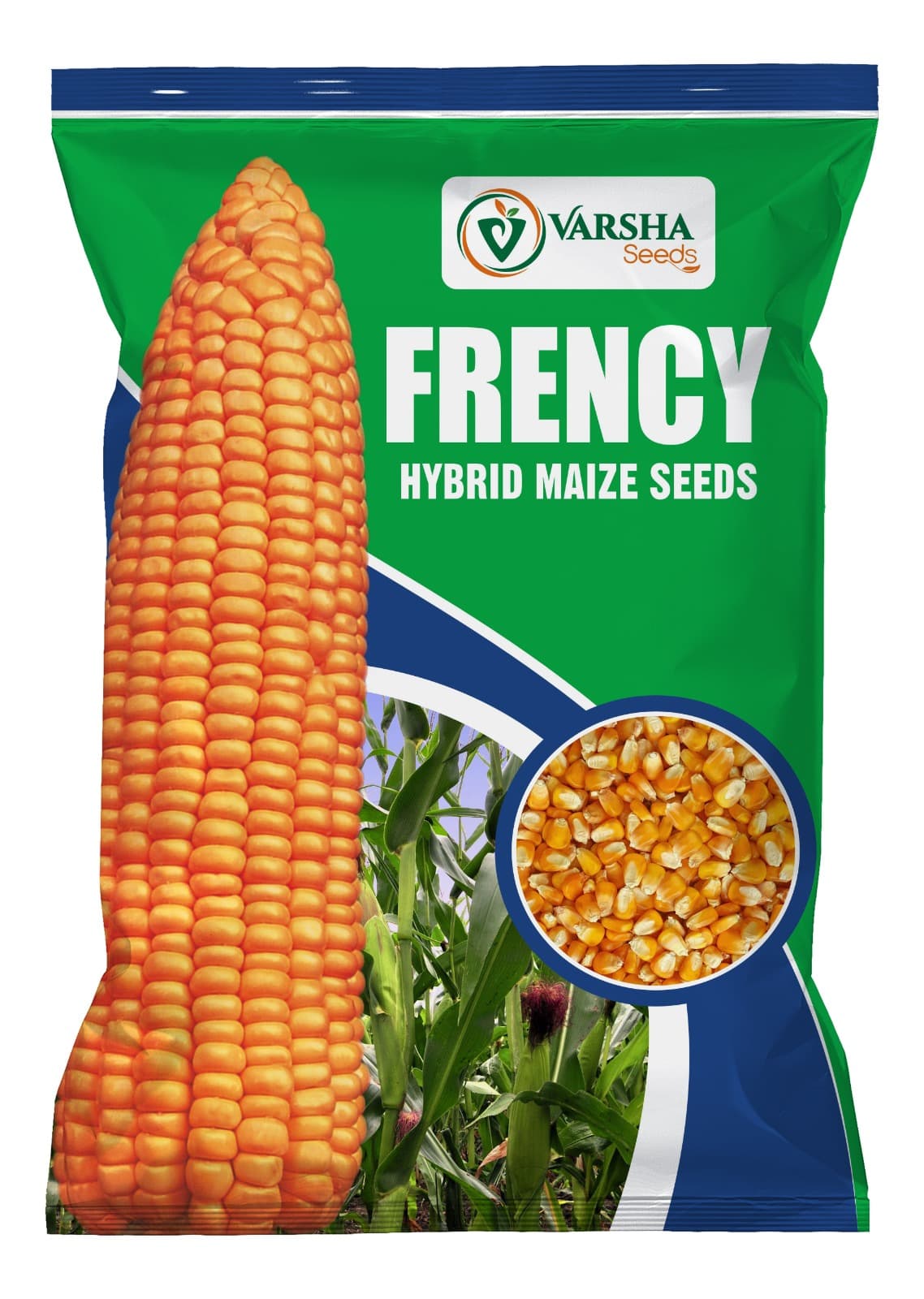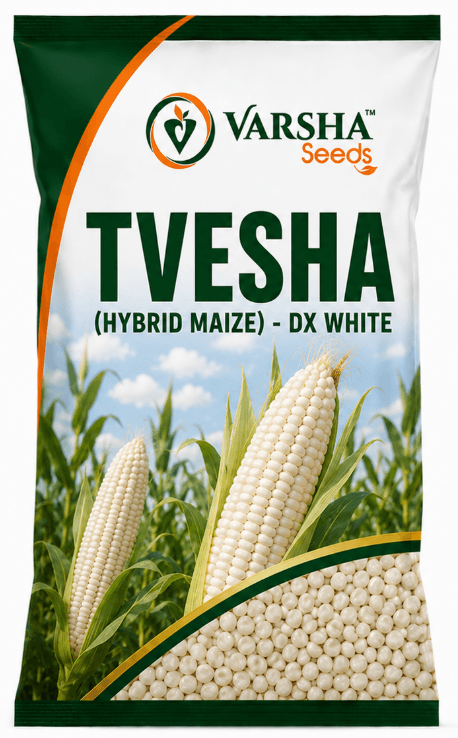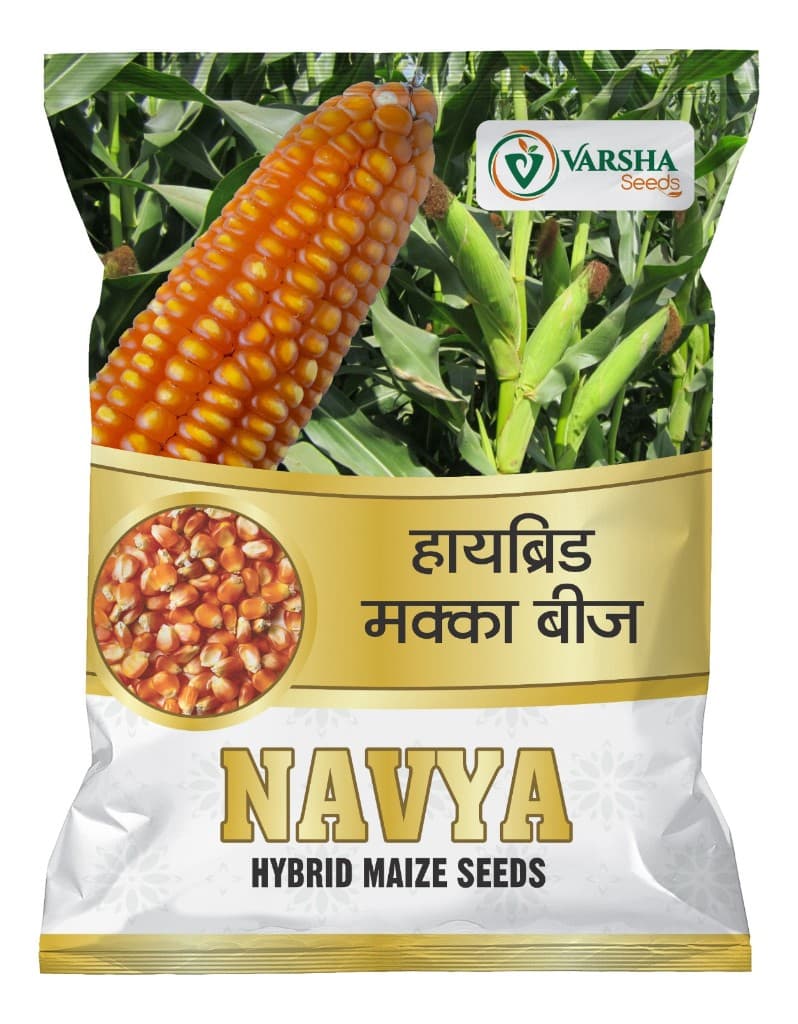

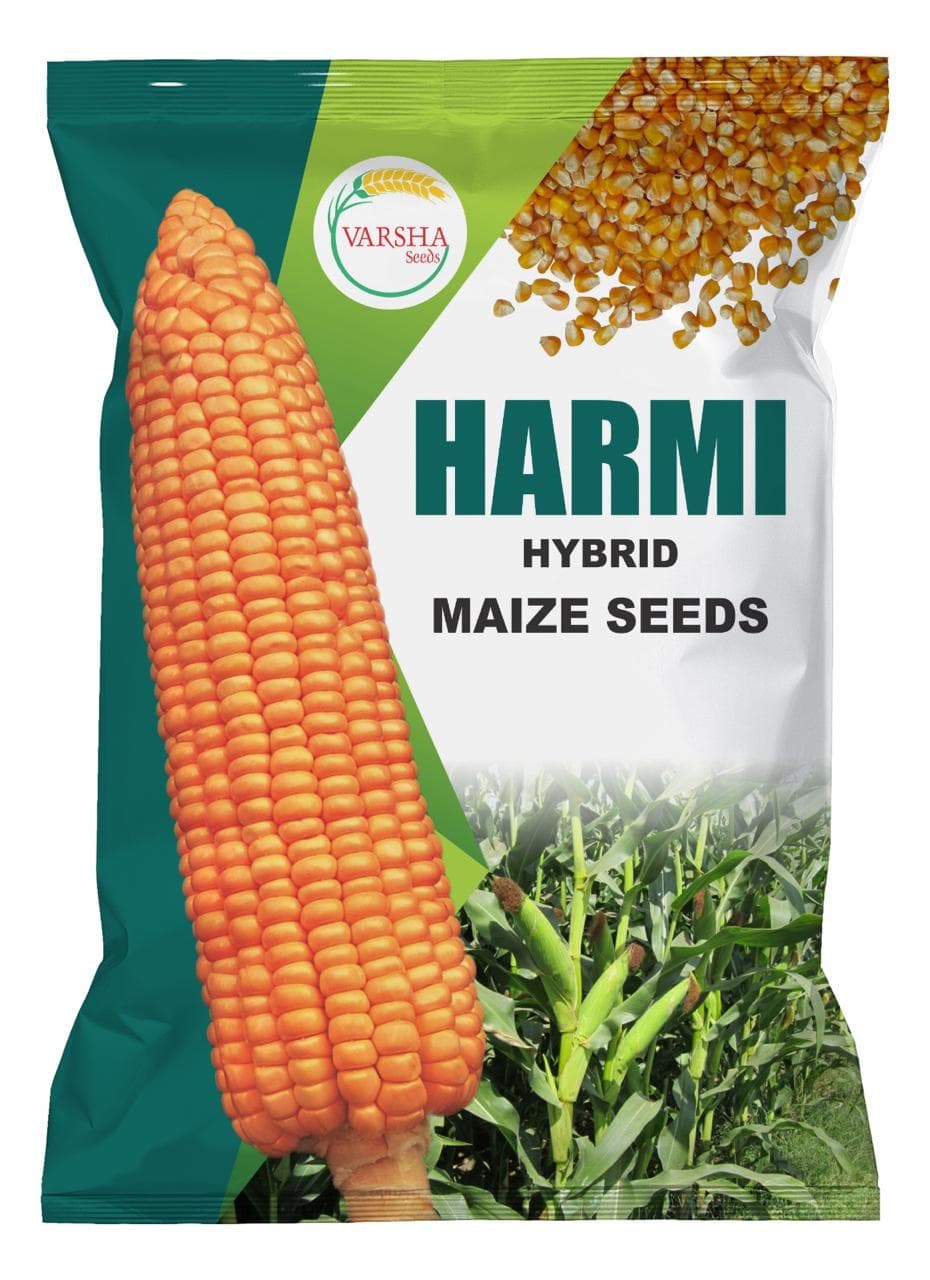
Harmi (Hybrid Maize Seeds)
Harmi is a premium hybrid maize variety developed for exceptional yield potential and versatility. This advanced hybrid delivers superior grain quality for food applications while also providing excellent silage for livestock feed. With enhanced disease resistance and adaptability across diverse environmental conditions, it has become a preferred choice for progressive farmers.
Key Features
- Advanced hybrid with exceptional yield potential (5-7 tonnes/ha)
- Maturity period: 70-90 days for grain; 60-70 days for silage
- Excellent grain quality with higher protein content (9-10%)
- Superior resistance to major diseases like BLSB, TLB, MLB, and common rust
- Early vigor and better seedling establishment
- Exceptional standability with strong root and stalk systems
- Adaptable across diverse soil types and climatic conditions
- Better drought tolerance with rapid recovery from stress periods
- Higher dry matter yield and digestibility when used for silage
- Higher shelling percentage (80-82%)
- Uniform cob development with complete tip filling
- Stay-green trait improves both grain filling and silage quality
Growing Information
Growing Conditions
Grows best in warm climates (20-30°C) and requires well-drained, fertile soils (pH 5.5-7.0). Typically sown during the Kharif season (June-July) or Rabi season (October-November) with irrigation.
Yield Estimates
Can yield 5-7 tonnes of grain per hectare under optimal conditions or 40-50 tonnes of green fodder per hectare if used for silage. Maturity 70-90 days for grain; silage harvestable at 60-70 days.
Packaging & Usage
Available in moisture-resistant packaging to maintain seed viability. Treated with appropriate fungicides for protection against seed-borne diseases. Seed rate: 30-40 kg/ha when sown as a pure crop
Key Points
Key Points
- Advanced hybrid with exceptional yield potential (5-7 tonnes/ha)
- Maturity period: 70-90 days for grain; 60-70 days for silage
- Excellent grain quality with higher protein content (9-10%)
- Superior resistance to major diseases like BLSB, TLB, MLB, and common rust
- Early vigor and better seedling establishment
- Exceptional standability with strong root and stalk systems
- Adaptable across diverse soil types and climatic conditions
- Better drought tolerance with rapid recovery from stress periods
- Higher dry matter yield and digestibility when used for silage
- Higher shelling percentage (80-82%)
- Uniform cob development with complete tip filling
- Stay-green trait improves both grain filling and silage quality
Agronomy & Management
Soil
Performs well in most soil types but prefers deep, well-drained loamy soils with good organic matter content. Ideal pH range is 5.5-7.0. Can tolerate slightly acidic conditions but not salinity or waterlogging. Minimum soil depth of 30 cm required for proper root development and anchorage.
Water & Irrigation
Moderate water requirement of 500-600 mm for the complete growing season. Critical irrigation stages are knee-high stage (V8-V10), tasseling (VT), silking (R1), and grain filling (R2-R5). For Kharif crop, 3-4 irrigations are sufficient with good rainfall; Rabi crop requires 5-7 irrigations at 10-15 day intervals. Adequate soil moisture during silking is particularly important for proper pollination and grain setting.
Sowing
Preparation
Prepare a fine tilth by 2-3 plowings followed by harrowing. Remove crop residues and weeds from previous season. For optimal yield, apply 10-15 tons of well-decomposed farmyard manure or compost before the last plowing. Raised bed planting is recommended in areas prone to waterlogging.
Sowing Depth
Sow seeds at 4-5 cm depth. Deeper sowing in light soils and shallow sowing in heavy soils. Ensure proper seed-soil contact for uniform germination.
Spacing
Row to row spacing of 60-75 cm and plant to plant spacing of 20-25 cm is recommended for grain production. For silage, slightly higher plant density with 60 cm × 15-20 cm spacing can be used.
Sowing Methods
- •Ridge planting: Recommended for better root development and moisture conservation
- •Flat planting: Suitable for areas with assured irrigation
- •Raised bed planting: Ideal for areas prone to waterlogging or heavy rainfall
Sowing Time
Seed Rate
20-25 kg/ha depending on seed size and recommended plant population (65,000-75,000 plants/ha for grain; 80,000-90,000 plants/ha for silage)
Harvesting
For grain, harvest when cobs are fully mature and grains show black layer formation at the base (physiological maturity). Moisture content at harvest should be around 20-25% for better post-harvest handling. For silage, harvest at dough stage (R4) when whole plant moisture is around 65-70% for optimal balance between yield and quality. Silage harvesting is typically done 60-70 days after sowing.
Post-Cutting Activities
For silage, chop the harvested plants into small pieces (1-2 cm) and ensile properly in pits or bags with proper compaction to remove air. Seal the silage properly to ensure anaerobic fermentation. For grain, dry the harvested cobs to bring moisture content below 15% before shelling for safe storage.
Fertilizer
Basal application: 40-60 kg N (90-130 kg urea), 60 kg P₂O₅ (300 kg SSP), and 40 kg K₂O (65 kg MOP) per hectare at sowing time. Top dressing: 60-80 kg N in two equal splits at knee-high stage (30-35 days) and tasseling stage (55-60 days). In sandy soils, potassium application can be increased to 60 kg/ha. Zinc deficiency is common in maize, apply zinc sulfate @ 25 kg/ha if deficiency symptoms appear or soil test indicates deficiency.
Weed Control
Critical weed-free period is 15-45 days after sowing. Pre-emergence application of Atrazine @ 1.0-1.5 kg a.i./ha within 3 days of sowing provides good control of annual grasses and broad-leaved weeds. Post-emergence application of Tembotrione @ 120 g a.i./ha at 20-25 days after sowing is effective against escaped weeds. One hand weeding or inter-row cultivation at 30-35 days after sowing improves soil aeration and weed control.
Pest & Disease Management
Major pests include fall armyworm, stem borer, and cob borer. Early detection and integrated pest management is recommended. For fall armyworm, spray Emamectin benzoate 5% SG @ 0.4 g/L or Spinetoram 11.7% SC @ 0.5 ml/L of water. Major diseases include Turcicum leaf blight and Maydis leaf blight, which can be managed by spraying Mancozeb @ 2.5 g/L or Propiconazole @ 1 ml/L of water. Seed treatment with Thiamethoxam 30% FS @ 10 ml/kg of seed provides protection against early-stage pests.