
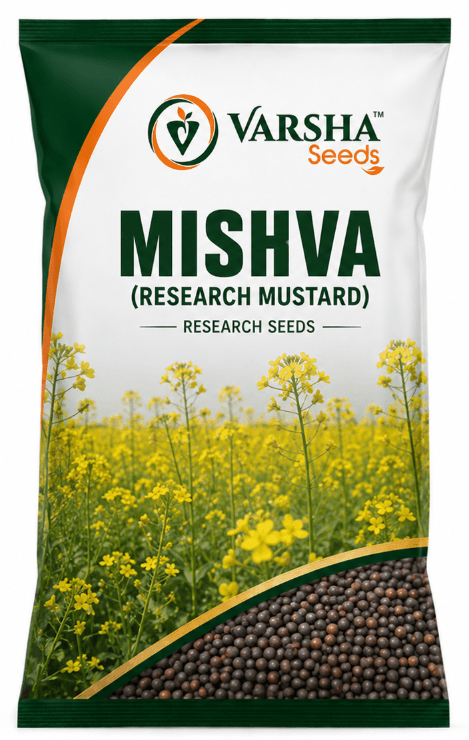
Mishva (Research Mustard)
Research mustard line intended for rabi oilseed production with broad adaptation, good branching and efficient siliqua development.
Key Features
- Optimum sowing window is usually in October-November
- Sulfur nutrition is important for yield and oil quality
- Critical moisture stages are flowering and siliqua filling
- Timely thinning helps maintain ideal plant stand
Growing Information
Growing Conditions
Mustard performs best in cool and dry climate (about 10-25 C) on well-drained loam soils with pH 6.5-7.5.
Yield Estimates
Seed yield generally ranges around 12-25 q/ha depending on management and environment.
Packaging & Usage
Typical seed rate is 3.5-5.0 kg/ha with line sowing.
Key Points
Key Points
- Optimum sowing window is usually in October-November
- Sulfur nutrition is important for yield and oil quality
- Critical moisture stages are flowering and siliqua filling
- Timely thinning helps maintain ideal plant stand
Agronomy & Management
Soil
Well-drained fertile loam to light clay soils are suitable.
Water & Irrigation
1-3 irrigations based on soil moisture; prioritize flowering and pod development stages.
Sowing
Preparation
Prepare fine seedbed and ensure proper field leveling.
Sowing Depth
2-3 cm.
Spacing
45 cm rows and about 10-15 cm plant spacing.
Sowing Methods
- •Line sowing
Sowing Time
Seed Rate
3.5-5.0 kg/ha
Harvesting
Harvest at physiological maturity when siliqua turn yellow and seeds harden.
Post-Cutting Activities
Dry bundles before threshing and store seed at safe moisture.
Fertilizer
Apply balanced NPK with sulfur as per soil test recommendations.
Weed Control
Early weeding and interculture during first 30 days is essential.
Pest & Disease Management
Monitor aphids and alternaria/white rust; use need-based IPM interventions.